Introduction: The Eighth Wonder of the World
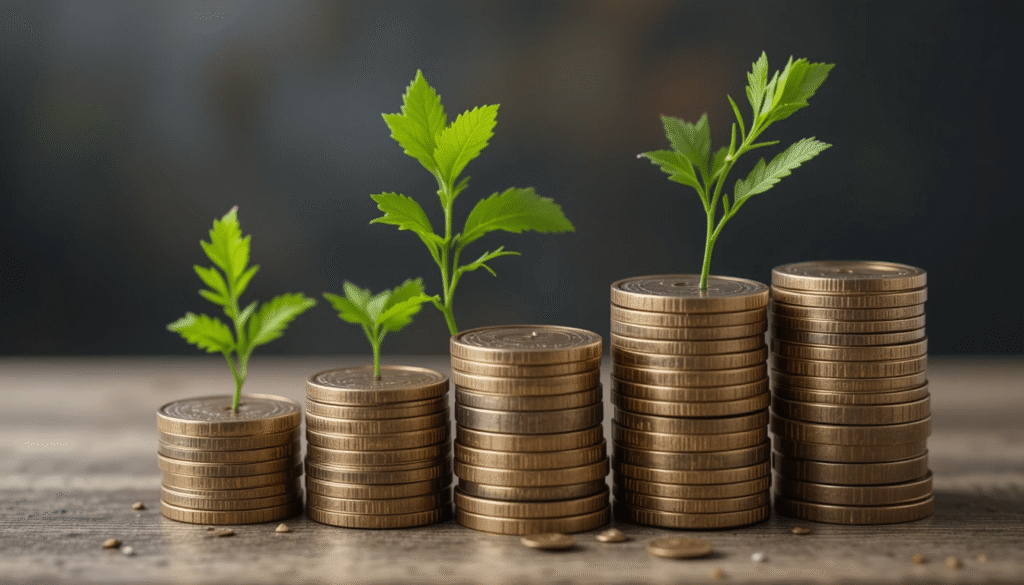
Albert Einstein famously called compound interest “the eighth wonder of the world,” adding:
“He who understands it, earns it; he who doesn’t, pays it.”
The Importance of Compound Interest in Wealth Building
By the end, you’ll know:
✅ The mathematical magic behind compounding (with real-world examples)
✅ How the richest families use it to stay wealthy
✅ Common mistakes that destroy compounding
✅ Actionable strategies to maximize your returns
Section 1: Understanding Compound Interest
1.1 What is Compound Interest?
Definition:
Compound interest is interest earned on both your initial investment (principal) and accumulated interest from previous periods.
Simple vs. Compound Interest (The $100,000 Difference)
| Year | Simple Interest (5%) | Compound Interest (5%) |
|---|---|---|
| 1 | $5,000 | $5,000 |
| 10 | $50,000 | $62,889 |
| 20 | $100,000 | $265,330 |
| 30 | $150,000 | $1,083,470 |
Assumes $100,000 initial investment
1.2 The Math Behind Compounding
The Compound Interest Formula
Copy
A = P(1 + r/n)^(nt)
Where:
A = Future value
P = Principal
r = Annual interest rate
n = Compounding periods per year
t = Time in years
Key Variables That Supercharge Growth
- Time – The most critical factor (see Section 3)
- Rate of Return – Even small differences matter (5% vs. 7% = 2X difference over 40 years)
- Consistency – Regular contributions accelerate growth

Section 2: Real-World Examples of Compound Interest
2.1 Historical Case Studies
Warren Buffett’s Secret
- Started investing at age 11
- 99% of his $135B net worth was earned after age 50
- Lesson: Time + Reinvested Dividends = Unstoppable Wealth
The Grace Groner Story
- Bought $180 of Abbott stock in 1935
- Never sold, reinvested dividends
- $7M estate at her death (age 100)
2.2 Modern Applications
Retirement Accounts (401k/IRA)
- 500/monthat7500/monthat71.2M
- Wait 10 years? Just 567K∗∗(The10−yeardelaycosts∗∗567K∗∗(The10−yeardelaycosts∗∗633K!)
Student Loan Debt (Reverse Compounding)
- $30,000 at 6% interest:
- Minimum payments: $43,000 total (13 years)
- Pay 100extra/month:∗∗Saves∗∗100extra/month:∗∗Saves∗∗7,200 + 4 years
Section 3: The Time Factor (Why Starting Early is Everything)
3.1 The Rule of 72
Estimate doubling time by dividing 72 by your annual return:
- 7% return = ~10.3 years to double
- 10% return = 7.2 years to double
3.2 The Millionaire Difference Between Starting at 25 vs. 35
| Age | Monthly Investment | Total at 65 (7% return) |
|---|---|---|
| 25 | $500 | $1.4M |
| 35 | $500 | $684K |
| Difference | – | $716K lost |
Section 4: How to Maximize Compound Growth
4.1 Optimal Investment Vehicles
A. Tax-Advantaged Accounts
- 401(k)/403(b) (Employer match = instant 100% return)
- Roth IRA (Tax-free growth)
- HSA (Triple tax advantage)
B. The Best Compounding Assets
| Asset | Avg. Return | Notes |
|---|---|---|
| S&P 500 | 10% nominal | Best for long-term growth |
| Dividend Stocks | 6-9% + yield | Reinvest dividends |
| Real Estate | 7-12% (with leverage) | Appreciation + cash flow |
4.2 Behavioral Strategies
The Automatic Millionaire Plan
- Automate investments (Pay yourself first)
- Never interrupt compounding (Avoid early withdrawals)
- Increase contributions annually (Even 1% more helps)
Section 5: Common Compounding Killers
5.1 The 5 Worst Mistakes
- Carrying Credit Card Debt (20% APR vs. 7% market returns)
- Cashing Out Retirement Accounts Early (Taxes + penalties = 50%+ loss)
- Market Timing (Missing just the 10 best days since 1993 cuts returns in half)
- High Fees (1% fee over 40 years = 28% less wealth)
- Inflation Neglect (3% inflation halves purchasing power in 24 years)
5.2 Psychological Barriers
- “I’ll start later” (See Section 3)
- “I need to pick stocks” (Index funds outperform 80% of professionals)
Section 6: Advanced Compounding Strategies
6.1 The Yield-Snowball Method
- Invest in high-dividend stocks (4-6% yield)
- Reinvest dividends automatically
- Watch payouts grow exponentially
- The Importance of Compound Interest in Wealth Building
Example: 100KinSCHD(3.5100KinSCHD(3.53,500/year → $7,000 in 10 years** (with growth)
6.2 Leveraged Compounding
- Mortgages: 3% loan vs. 7% market returns
- Margin loans: Risky but used wisely by the wealthy
- The Importance of Compound Interest in Wealth Building
Section 7: Generational Wealth Through Compounding
7.1 Trust Funds That Last Centuries
- The Vanderbilts: 200Min1877→∗∗200Min1877→∗∗0 by 1973** (Spent principal)
- The Rothschilds: Still wealthy after 200+ years (Reinvested earnings)
- The Importance of Compound Interest in Wealth Building
7.2 How to Set Up a Family Legacy
- Teach kids early (UTMA/529 accounts)
- Use dynasty trusts (Avoid estate taxes)
- Focus on dividend growth stocks (Perpetual income)
- The Importance of Compound Interest in Wealth Building
Conclusion: Your Compounding Action Plan
- Start today – Open a Roth IRA (Even $50/month matters)
- Automate – Set up recurring transfers
- Avoid withdrawals – Let “money babies” reproduce
- Increase contributions – Boost by 1% annually
- The Importance of Compound Interest in Wealth Building
Remember: The best time to plant a tree was 20 years ago. The second-best time? Today.
